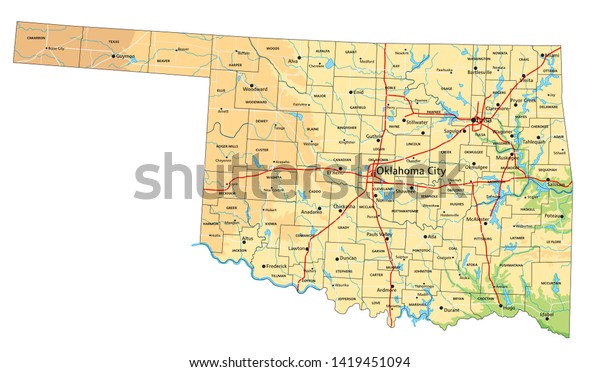
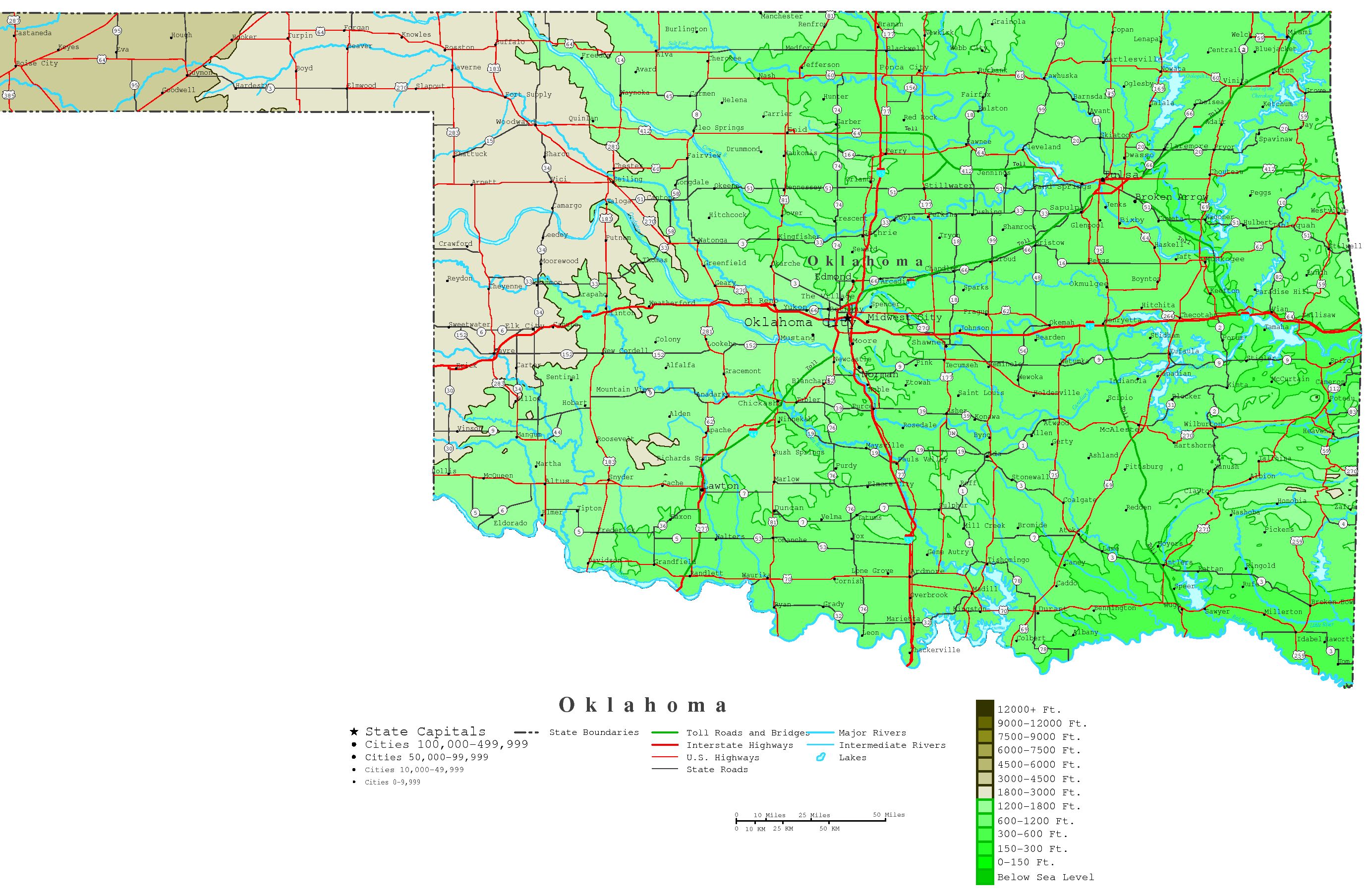
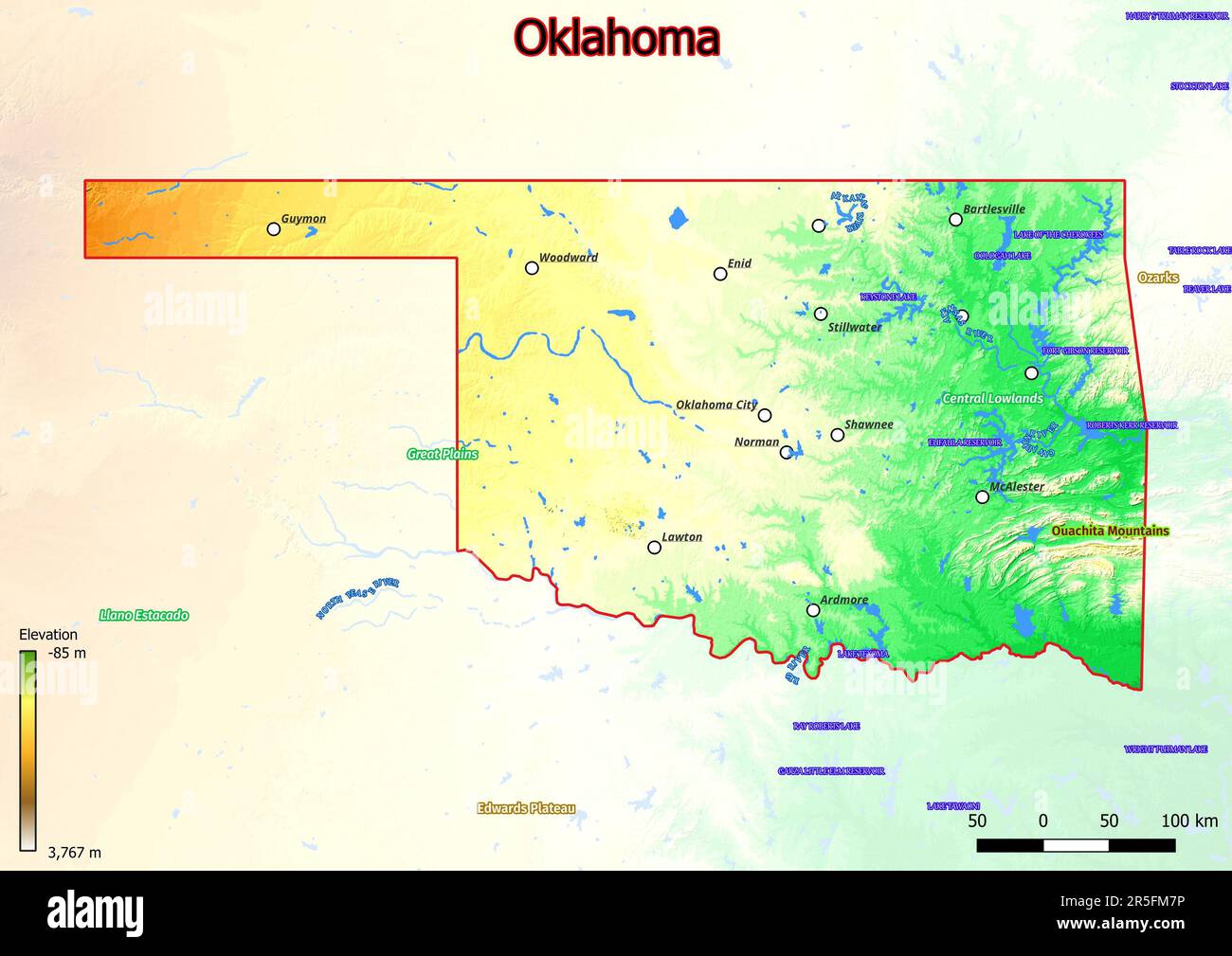
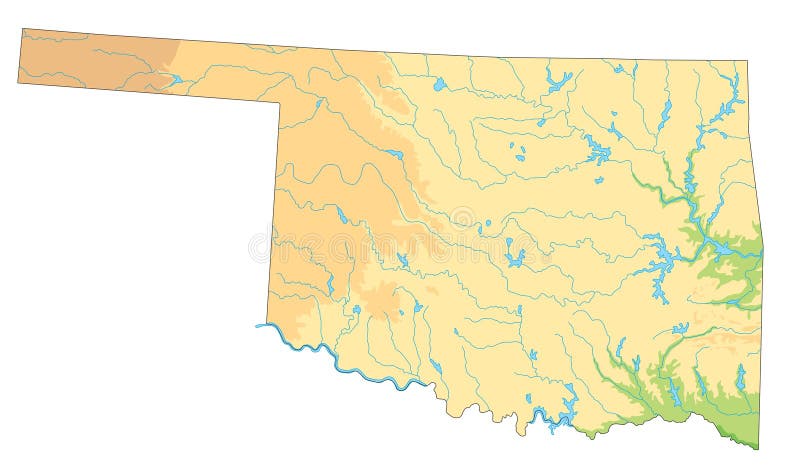
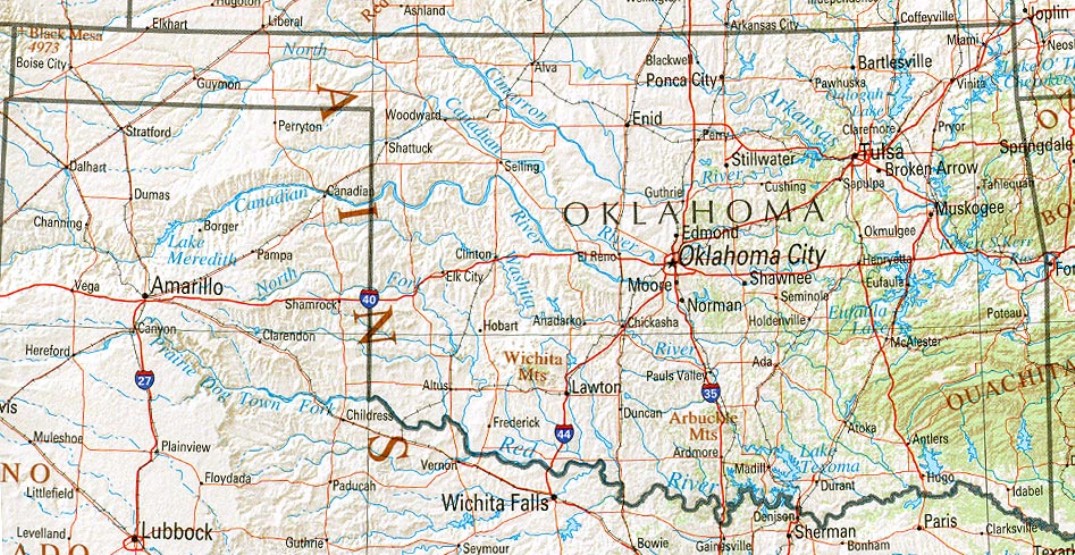
Unlock the secrets of Oklahoma's diverse landscapes by exploring its physical map. This comprehensive guide delves into the state's remarkable geography, from the vast Great Plains in the west to the ancient mountains of the east. Understand the major rivers like the Red and Arkansas, discover the towering Black Mesa, and grasp how these natural features shape Oklahoma's climate and culture. Navigate through detailed insights into the Ouachita and Ozark Plateaus, the Cross Timbers, and the Rolling Prairies. Whether you are a student, a traveler, or simply curious about the Sooner State's natural beauty, this informational resource provides a trending overview of the physical map of Oklahoma, highlighting key landforms, elevations, and waterways for an enriching educational experience.
Exploring the Physical Map of Oklahoma: A Journey Through Diverse Landscapes
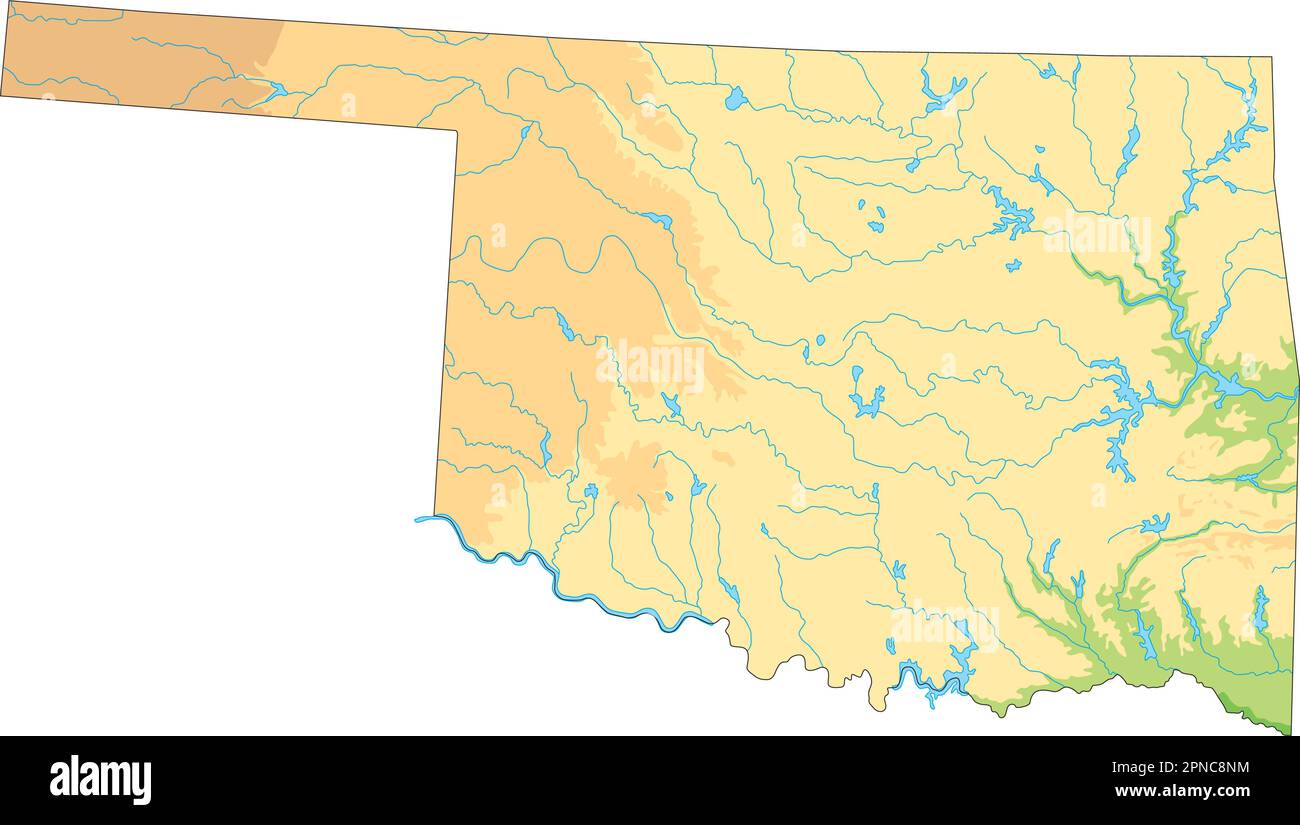
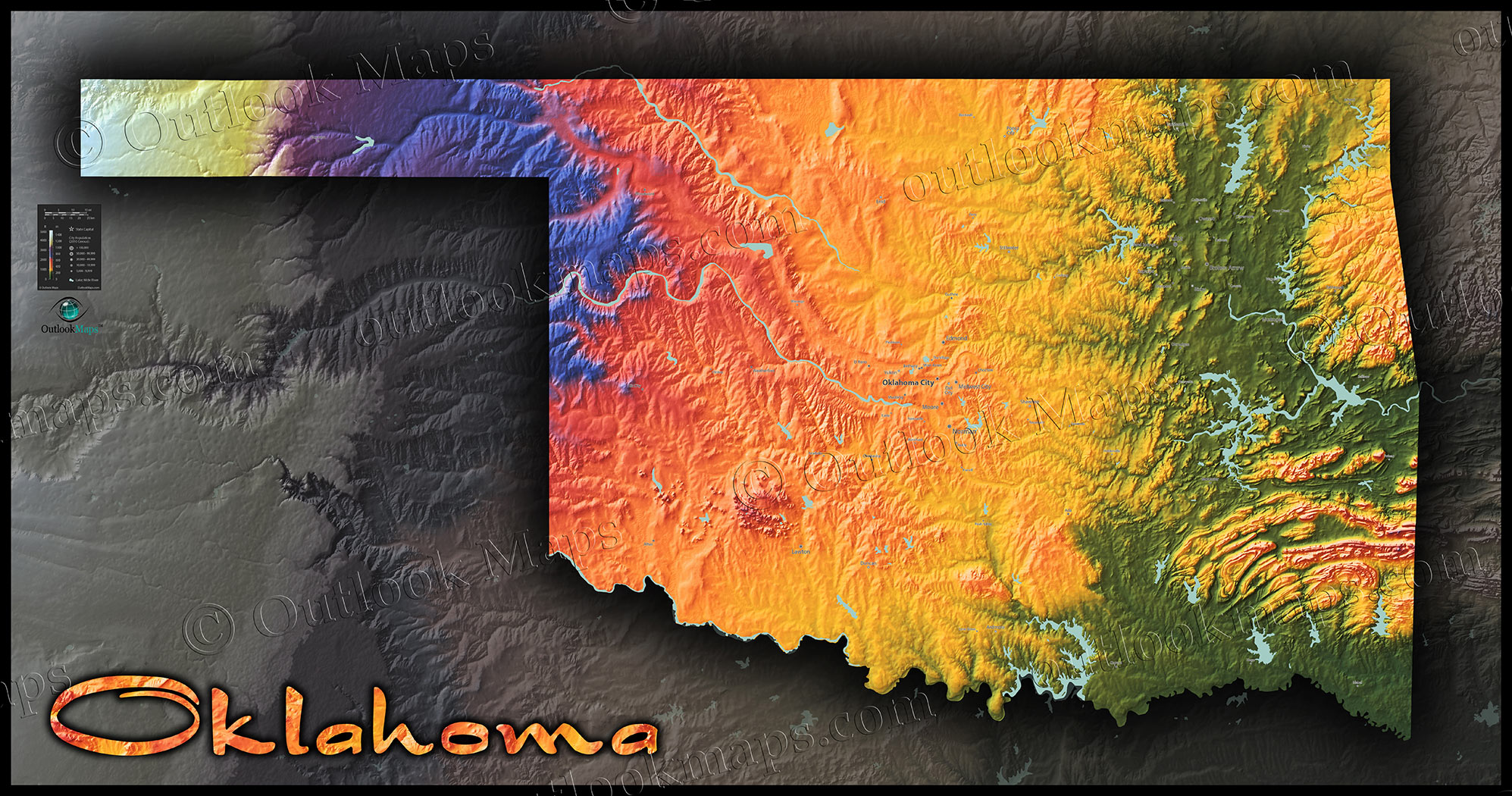
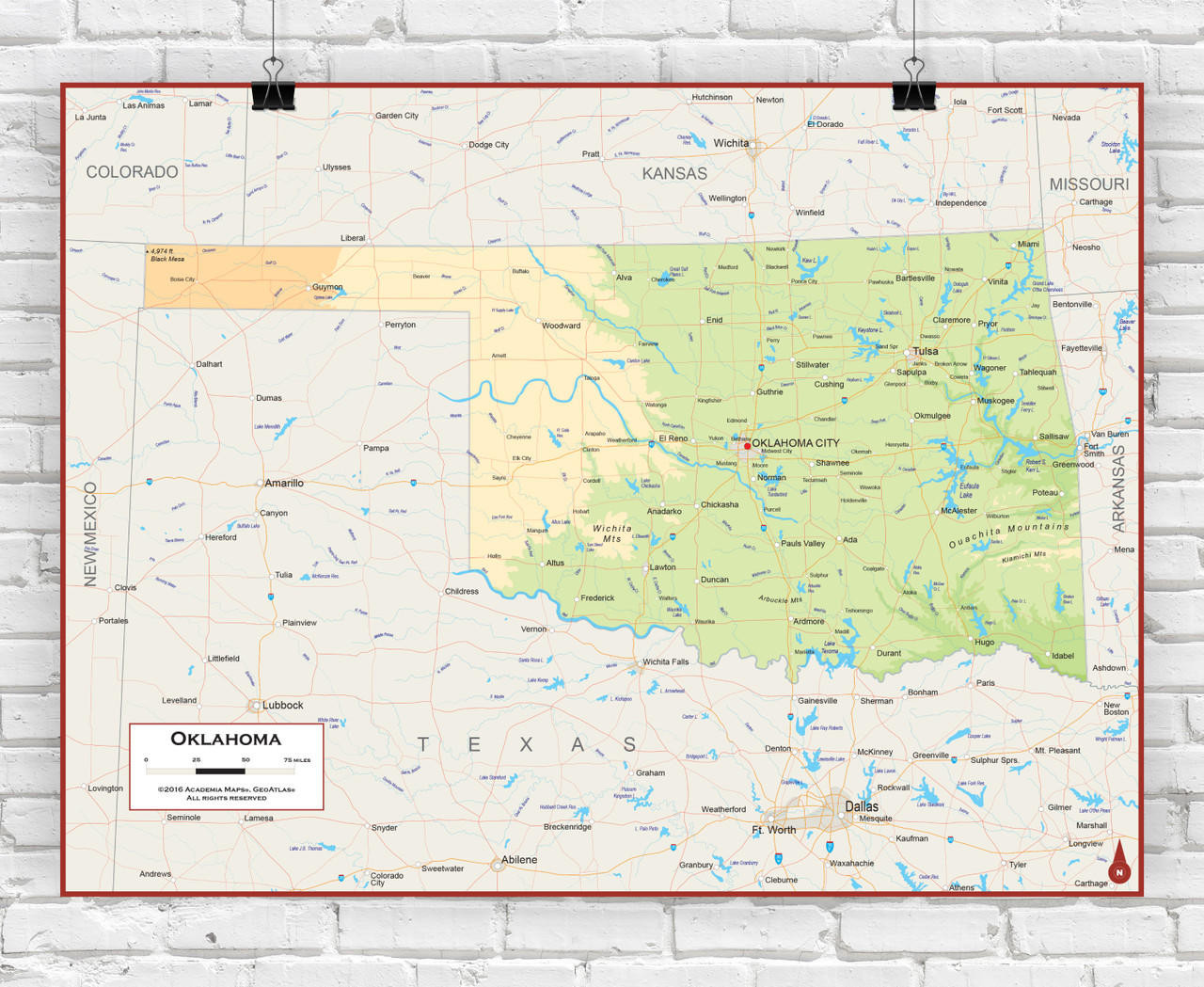
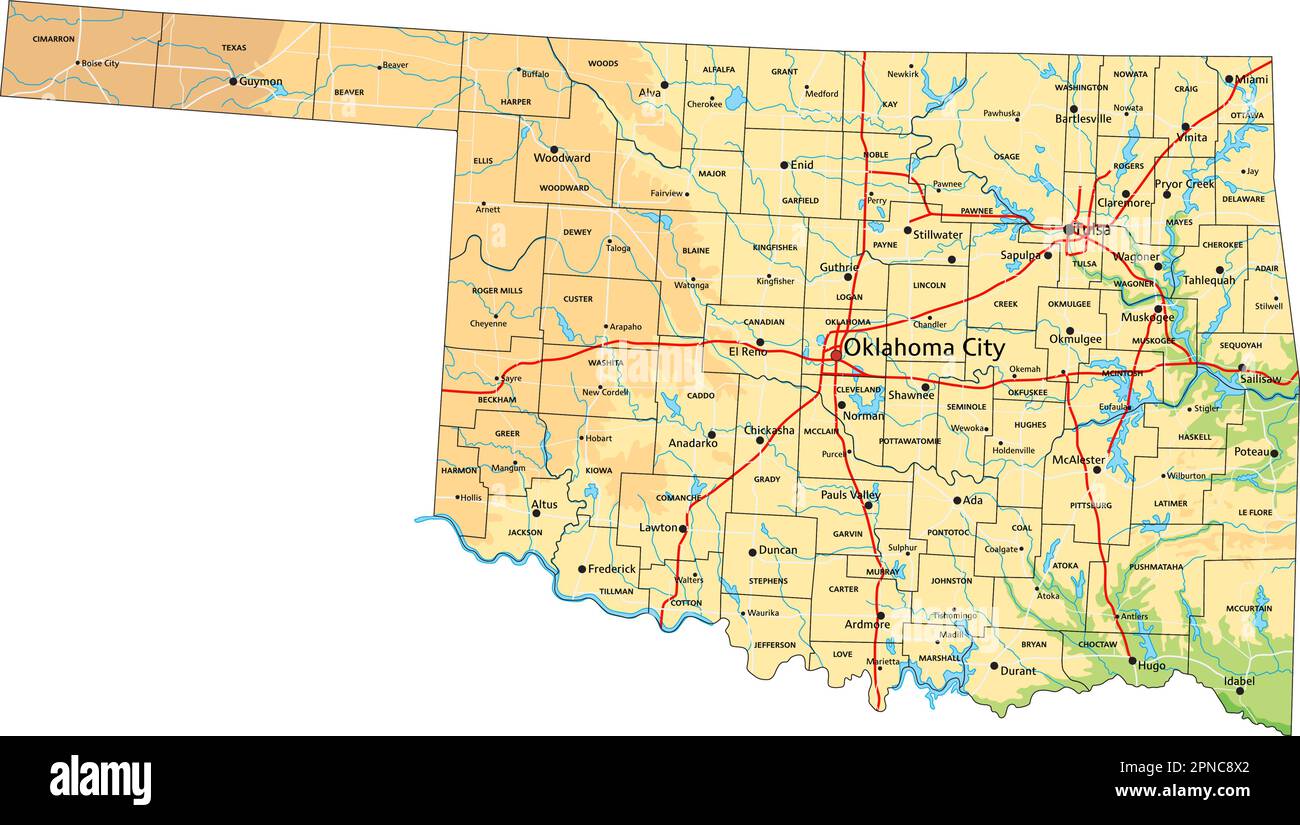
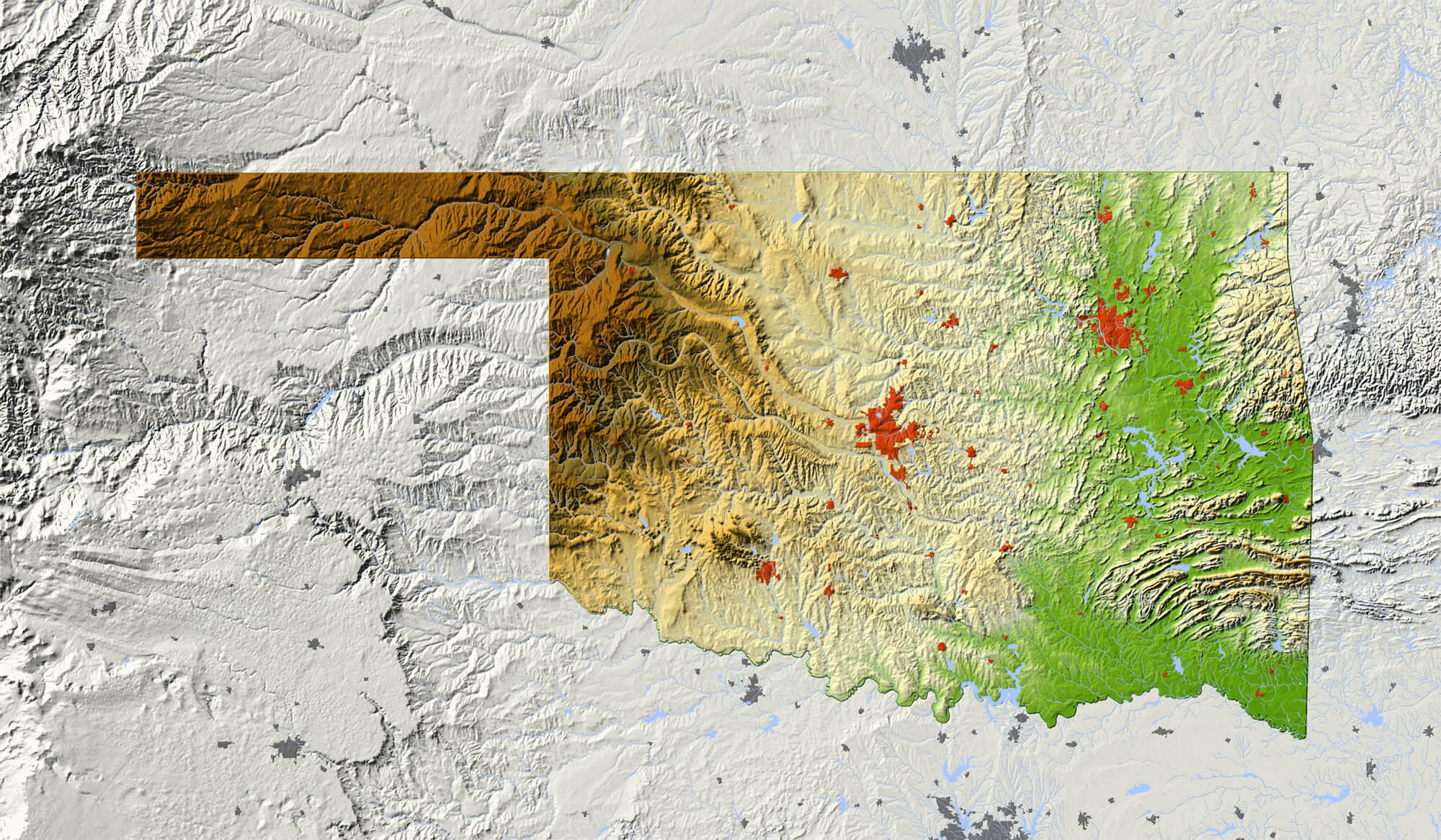
The physical map of Oklahoma showcases a truly fascinating blend of geographical features, revealing why the state is often called a 'microcosm of the United States.' This detailed look at Oklahoma’s physical landscape helps us understand its distinct regions, from towering peaks to expansive plains, shaping everything from its weather to its economy. We'll explore who benefits from this knowledge, what features stand out, where these elements are located across the state, why they matter, and how they contribute to Oklahoma's unique identity today.
Discovering Oklahoma's Diverse Terrain: The Physical Map of Oklahoma
Stepping into the world of Oklahoma's geography feels like uncovering a hidden treasure. The physical map of Oklahoma serves as our essential guide, illustrating the diverse and often surprising topography that defines the Sooner State. You'll find yourself wondering how such a variety of landforms can exist within one state's borders.
This visual representation highlights the natural elevations, rivers, and mountain ranges, giving us a clearer picture of Oklahoma's inherent beauty and ecological richness. Understanding the physical map of Oklahoma helps us appreciate the state's natural heritage and its connection to the larger North American continent.
Key Geographical Regions of Oklahoma: Unveiling the Physical Map
Oklahoma's physical map is like a patchwork quilt of distinct geographical regions, each with its own character. These regions contribute significantly to the state's ecological diversity and offer a unique perspective on its natural history. Let’s take a closer look at these defining areas across the physical map of Oklahoma.
The Great Plains of Oklahoma: A Vast Landscape on the Physical Map
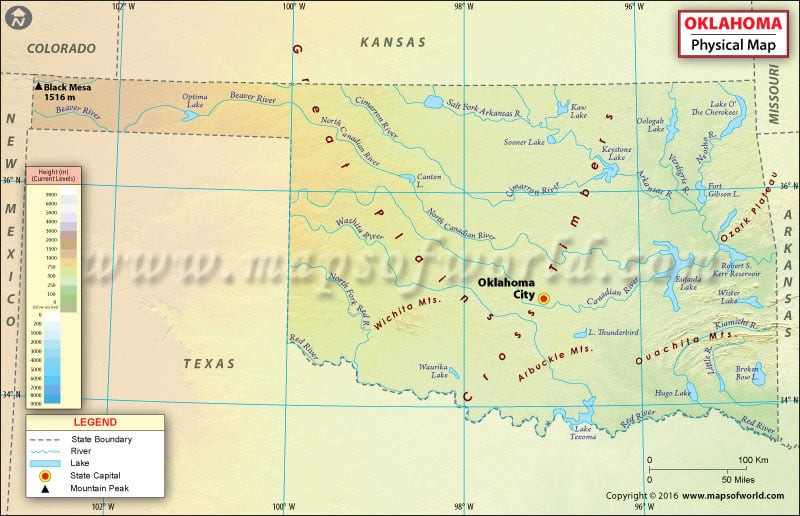
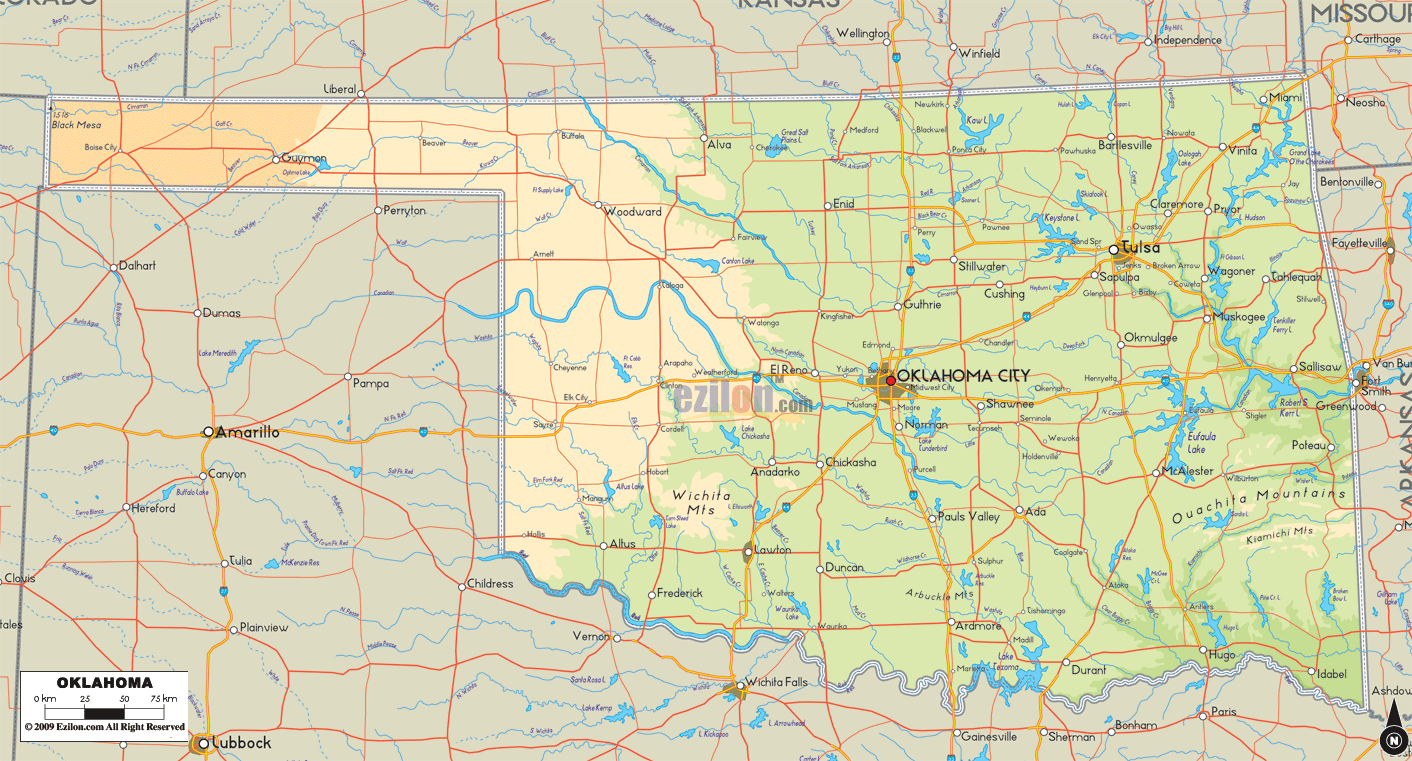
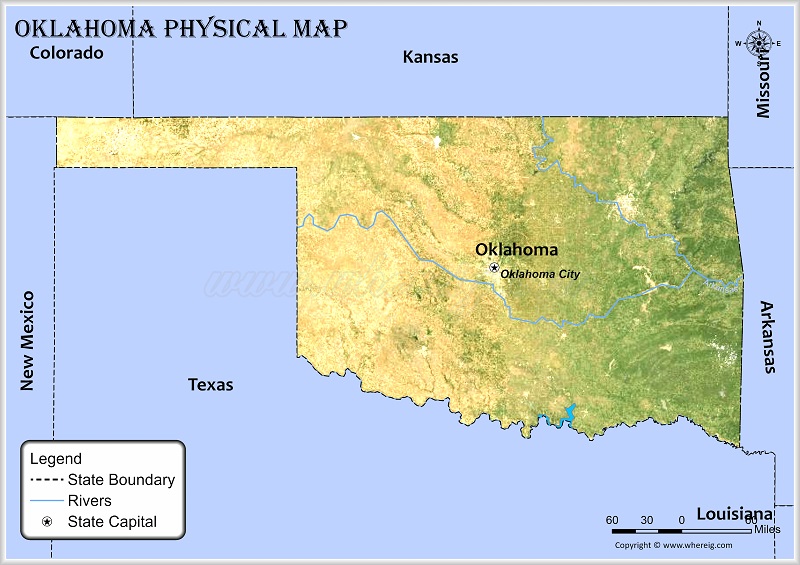
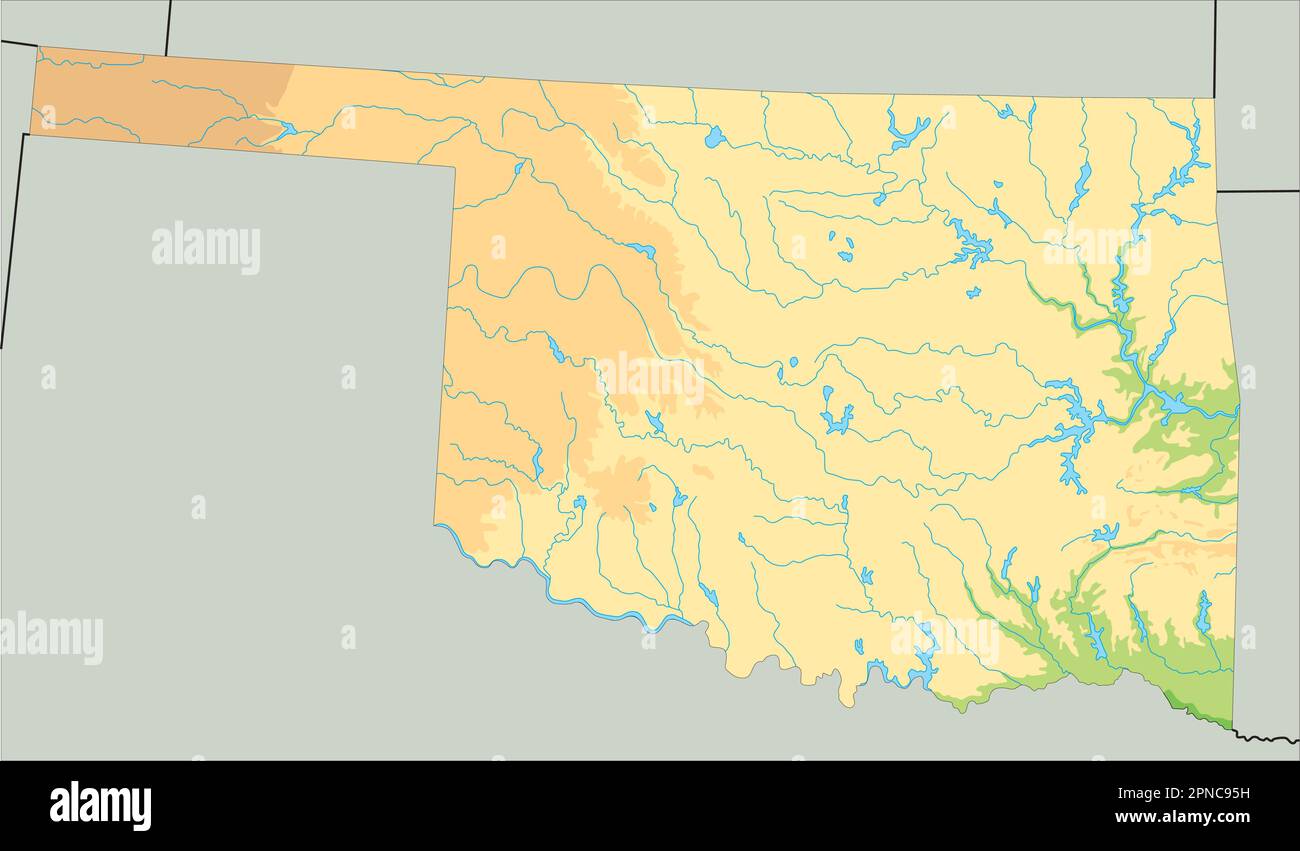
To the west, the physical map of Oklahoma proudly displays a significant portion of the Great Plains. This expansive, relatively flat landscape is characterized by rolling prairies and fertile farmlands. It's a land of big skies and open spaces, essential for Oklahoma's agricultural sector.
Eastern Oklahoma's Highlands: Mountains and Plateaus on the Physical Map
Moving east, the physical map of Oklahoma transforms, revealing the rugged beauty of the Ouachita Mountains and the Ozark Plateau. These ancient uplifts bring a dramatic change in elevation and provide stunning vistas. These eastern highlands are a stark contrast to the western plains.
Oklahoma's Major Rivers and Waterways: Lifeblood on the Physical Map
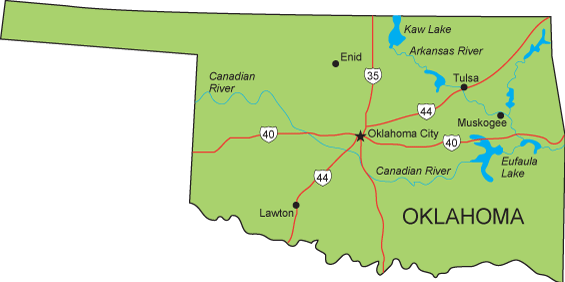
Rivers are truly the veins of the land, and the physical map of Oklahoma highlights several crucial waterways. The Red River forms much of Oklahoma's southern border, while the Arkansas River flows through the northeastern part of the state. These rivers are vital for irrigation, recreation, and supporting diverse ecosystems across the physical map of Oklahoma.
Understanding Oklahoma's Elevations: Insights from the Physical Map
The varying elevations across the physical map of Oklahoma create a rich tapestry of environments. From its highest peaks to its lowest river valleys, each elevation point tells a story about the state's geological past. Understanding these changes helps us appreciate the state's natural beauty and challenges.
| Feature | Type | Location | Description |
| Black Mesa | High Point | Northwestern Panhandle | Highest natural point in Oklahoma, a flat-topped mesa. |
| Ouachita Mountains | Mountain Range | Southeastern Oklahoma | Rugged, folded mountains, part of an ancient uplift. |
| Ozark Plateau | Plateau | Northeastern Oklahoma | Dissected plateau with rolling hills and streams. |
| Red River | River | Southern Border | Major river forming much of the border with Texas. |
| Arkansas River | River | Northeastern Oklahoma | Significant waterway flowing into the Mississippi River system. |
| Great Plains | Physiographic Province | Western Oklahoma | Vast, generally flat to rolling grasslands. |
| Lowest Point | River Valley | Southeastern Oklahoma (Red River) | Elevation around 289 feet above sea level. |
What Others Are Asking About the Physical Map of Oklahoma? (FAQ Style)
What are the major landforms in Oklahoma?
Oklahoma features diverse landforms including the vast Great Plains in the west, the rugged Ouachita Mountains and the Ozark Plateau in the east, and various prairie regions. Significant rivers like the Red and Arkansas also define the state's physical geography, creating a truly varied landscape across the physical map of Oklahoma.
What are the three major landforms found in Oklahoma?
The three major landforms that primarily define Oklahoma are the Great Plains, the Ouachita Mountains, and the Ozark Plateau. These distinct regions each offer unique geological characteristics, influencing everything from local ecosystems to historical settlement patterns, clearly visible on any physical map of Oklahoma.
What is the highest point on the physical map of Oklahoma?
The highest point on the physical map of Oklahoma is Black Mesa, located in the northwestern tip of the Panhandle. This impressive landmark reaches an elevation of 4,973 feet (1,516 meters) above sea level, offering panoramic views of the surrounding landscape and marking a significant geographical feature for the state.
Which major rivers are shown on a physical map of Oklahoma?
A physical map of Oklahoma prominently displays key rivers such as the Red River, which forms a large portion of the state's southern boundary. The Arkansas River flows through northeastern Oklahoma, contributing to the state's water resources. Other important rivers include the Canadian and Washita, all vital to Oklahoma's hydrology.
How does Oklahoma's physical geography impact its climate?
Oklahoma's physical geography significantly influences its climate, contributing to its diverse weather patterns. The lack of major east-west mountain ranges allows both cold arctic air and warm moist Gulf air to penetrate the state, leading to extreme temperature variations and frequent severe weather. The varied terrain also affects precipitation distribution across the physical map of Oklahoma.
FAQ About the Physical Map of Oklahoma
What is a physical map of Oklahoma?
A physical map of Oklahoma illustrates the natural geographic features of the state. It shows landforms like mountains, rivers, plains, and elevations. This map is essential for understanding Oklahoma's natural environment and how these features are distributed.
Who uses a physical map of Oklahoma?
Educators, students, geologists, environmental scientists, tourists, and outdoor enthusiasts all use a physical map of Oklahoma. It provides vital information for studying geology, planning trips, understanding ecosystems, and appreciating the state's natural beauty and resources.
Why is studying Oklahoma's physical map important?
Studying Oklahoma's physical map is important because it reveals how natural features influence climate, agriculture, population distribution, and historical development. It helps us appreciate the state's diverse environments and understand the challenges and opportunities presented by its unique geography.
How can a physical map of Oklahoma aid in understanding its history?
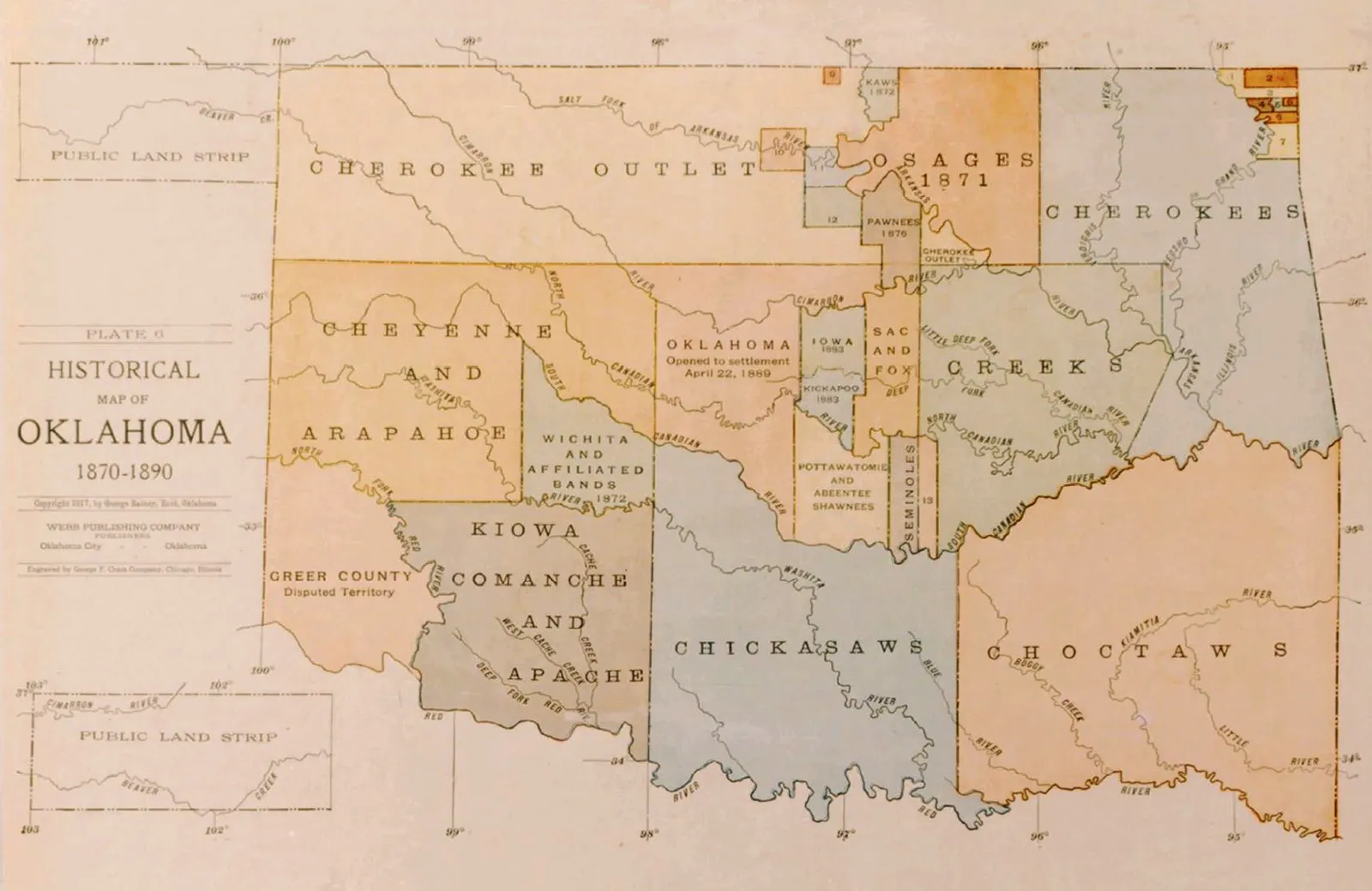
A physical map of Oklahoma helps us visualize how early settlements, trade routes, and resource exploitation were shaped by rivers, mountains, and plains. Understanding the terrain explains why certain areas developed differently and how Native American tribes and pioneers interacted with the land.
Summary of Oklahoma's Physical Map: Diverse Beauty Revealed
The physical map of Oklahoma truly unveils a land of remarkable contrasts and incredible natural beauty. From the sweeping, windswept plains of the west to the ancient, tree-covered mountains in the east, the state offers a geographical story like no other. Discovering its major rivers and varied elevations gives us a profound appreciation for its rich environment. We hope this exploration of the physical map of Oklahoma inspires you to delve deeper into its wonders.
Diverse landscapes, Great Plains, Ozark Plateau, Ouachita Mountains, Red River, Arkansas River, Black Mesa, highest point, lowest point, major waterways, Oklahoma geography.
Physical Map Of Oklahoma Ezilon Maps Oklahoma Physical Map High Detailed Oklahoma Physical Map Labeling High Detailed Oklahoma Physical Map 600w 1419451094 Oklahoma Wall Map Physical World Maps Online Oklahoma State Physical Wall Map 03851
Oklahoma Features Oklahoma Physical Map Physical Map Of Oklahoma Shows Landform Features Such As Mountains Physical Map Of Oklahoma Shows Landform Features Such As Mountains Hills Plains Bridges Rivers Lakes 2R5FM7P High Detailed Oklahoma Physical Map With Labeling Stock Vector Image High Detailed Oklahoma Physical Map With Labeling 2PNC8X2 Map Of Oklahoma And Oklahoma Maps Oklahoma Simple
I Tested The Incredible Size Of Oklahoma With This Map 71uxOj SzLL. SL500 OK Map Oklahoma State Map Ok Physical Map Of Oklahoma With Mountains Plains Bridges Rivers Lakes Original 9595997 1 Physical Map Of Oklahoma Oklahoma Territory Wikipedia High Detailed Oklahoma Physical Map 2PNC95H
Oklahoma United States Of America Physical Labelled Points Of Stock Oklahoma United States America Physical Labelled Points Oklahoma State United States America Colored Elevation Map 274956987 Oklahoma Elevation Map Map Of Oklahoma Oklahoma Physical Map Oklahoma Olap Land Map At Scarlett Madgwick Blog Oklahoma Map
American Heartland Theme Park Opening In 2026 In Oklahoma Park Rovers OklahomaMap Map Of Every Oklahoma Towns 288topo Map Of Oklahoma Oklahoma Shaded Relief Map BN903R Detailed Oklahoma Physical Map Stock Vector Of Contour Print 277818723
Oklahoma Elevation Map Oklahoma Shaded Relief Map Ottawa Tribe Of Oklahoma Oklahoma Native News Historical Map Of Oklahoma 1870 1890 IndianPhysical Map Of Oklahoma Oklahoma Satellite Map 1265x734 Physical Map Of Oklahoma Physical Map Of The State Of Oklahoma Physical Map Of Oklahoma Physical Map Of The State Of Oklahoma Showing Rivers Lakes And Other
Oklahoma Reference Map Oklahoma Ref 2001 Physical Map Of Oklahoma High Detailed Oklahoma Physical Map 2PNC8NM Reference Maps Of Oklahoma USA Nations Online Project Oklahoma Map Physical Map Of Oklahoma Physical Map Of Oklahoma